


Long - term use at high temperatures can have a profound impact on MoSi2 (Molybdenum Disilicide) heating elements. As a supplier of MoSi2 Heating Elements, I have witnessed firsthand the various effects that high - temperature, long - term operation can have on these essential components. In this blog, I will delve into the scientific aspects of how high - temperature, long - term use affects MoSi2 heating elements.
Oxidation and the Protective Layer
One of the most significant aspects of MoSi2 heating elements in high - temperature environments is oxidation. At high temperatures, MoSi2 reacts with oxygen in the air to form a protective layer of silicon dioxide (SiO2). This protective layer is crucial as it acts as a barrier, preventing further oxidation of the underlying MoSi2 material.
When the heating element is first heated to high temperatures, a thin layer of SiO2 begins to form on the surface. This layer is dense and adherent, effectively isolating the MoSi2 from the surrounding oxygen. The formation of this protective layer is a self - limiting process. As long as the layer remains intact, the oxidation rate of the MoSi2 is significantly reduced.
However, during long - term use at high temperatures, several factors can compromise the integrity of this protective layer. Thermal cycling, for example, can cause stress within the SiO2 layer. When the heating element is heated and cooled repeatedly, the difference in thermal expansion coefficients between the MoSi2 and the SiO2 layer can lead to cracking or spalling of the protective layer. Once the protective layer is damaged, oxygen can reach the underlying MoSi2, leading to accelerated oxidation.
Mechanical Properties and Creep
High - temperature, long - term use also affects the mechanical properties of MoSi2 heating elements. One of the critical mechanical phenomena that occur is creep. Creep is the slow, time - dependent deformation of a material under a constant load at high temperatures.
MoSi2 heating elements are often subjected to their own weight and sometimes additional mechanical stresses during installation and operation. At high temperatures, the atomic structure of MoSi2 becomes more mobile, allowing for the movement of atoms and dislocations within the material. This movement results in a gradual change in the shape of the heating element over time.
The creep rate of MoSi2 is influenced by several factors, including temperature, stress level, and the microstructure of the material. Higher temperatures generally lead to a higher creep rate. As the heating element creeps, it can sag or deform, which may affect its performance. For example, a sagging heating element may come into contact with other components in the heating system, leading to short - circuits or uneven heating.
Electrical Resistance Changes
Another important aspect affected by long - term high - temperature use is the electrical resistance of MoSi2 heating elements. The electrical resistance of a heating element is a crucial parameter as it determines the amount of heat generated when an electric current passes through it.
During the initial stages of high - temperature operation, the electrical resistance of MoSi2 heating elements may change slightly due to the formation of the protective SiO2 layer. The presence of the SiO2 layer can affect the electrical conductivity of the surface of the heating element. However, this change is usually relatively small and can be accounted for during the design of the heating system.
Over a long period of high - temperature use, more significant changes in electrical resistance can occur. Oxidation of the MoSi2 material can lead to a decrease in the cross - sectional area of the conducting path. As the cross - sectional area decreases, the electrical resistance increases according to the formula (R=\rho\frac{l}{A}), where (R) is the resistance, (\rho) is the resistivity, (l) is the length of the conductor, and (A) is the cross - sectional area. An increase in electrical resistance can lead to a change in the power output of the heating element. If the power supply to the heating element remains constant, an increase in resistance will result in a decrease in the current flowing through the element, and thus a decrease in the heat output.
Chemical Reactions with Surrounding Atmospheres
In addition to oxidation, MoSi2 heating elements can react with other substances in the surrounding atmosphere during long - term high - temperature use. For example, in some industrial heating applications, the heating elements may be exposed to reactive gases such as sulfur - containing gases or halogens.
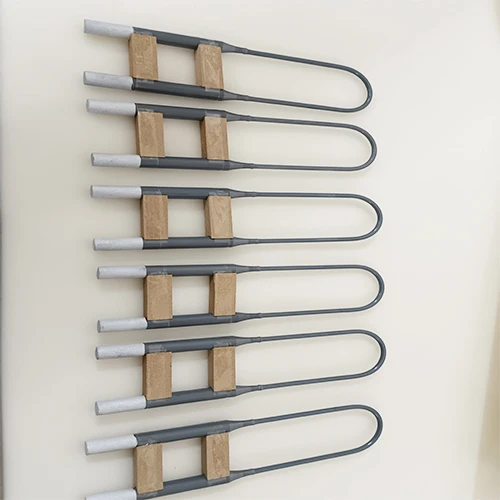

These reactive gases can react with the MoSi2 or the protective SiO2 layer. Sulfur - containing gases can react with the SiO2 layer to form metal sulfides, which can disrupt the protective layer and accelerate the corrosion of the MoSi2. Halogens, on the other hand, can react directly with the MoSi2 to form volatile compounds, leading to the loss of material from the heating element.
Strategies to Mitigate the Effects
To mitigate the effects of long - term high - temperature use on MoSi2 heating elements, several strategies can be employed. One approach is to optimize the design of the heating element to reduce thermal stress. For example, using a proper support structure can minimize the mechanical stress on the heating element and reduce the risk of creep.
Another strategy is to control the operating environment. Maintaining a clean and stable atmosphere around the heating element can reduce the risk of chemical reactions. In some cases, using a protective coating on the heating element can provide an additional layer of protection against oxidation and chemical attack.
Regular inspection and maintenance of the heating elements are also essential. By monitoring the electrical resistance and physical appearance of the heating elements, potential problems can be detected early, and the elements can be replaced before they fail completely.
Conclusion
Long - term use at high temperatures has a complex and multi - faceted impact on MoSi2 heating elements. Oxidation, mechanical creep, electrical resistance changes, and chemical reactions with the surrounding atmosphere are all factors that need to be considered when using these heating elements in high - temperature applications.
As a supplier of Molybdenum Disilicide Heating Elements and Moly Disilicide Heating Elements, including Right Angle Silicon Molybdenum Rod, we understand the importance of providing high - quality products that can withstand the challenges of long - term high - temperature use. If you are in need of reliable MoSi2 heating elements for your high - temperature applications, we invite you to contact us for further discussions and procurement. We are committed to providing you with the best solutions and products to meet your heating needs.
References
- Kainer, K. U. (Ed.). (2006). Metal Matrix Composites: Processing, Design, and Applications. Wiley - VCH.
- Schütze, M. (2001). High - Temperature Corrosion. Wiley - VCH.
- Zuo, T., & Zhang, L. (2018). Oxidation behavior of MoSi2 - based composites at high temperatures. Journal of Materials Science, 53(13), 9410 - 9423.


