


Hey there! I'm a supplier of Mullite Insulation Bricks, and today I wanna chat about how the molding method affects the structure of these awesome bricks.
Mullite Insulation Bricks are super important in many industrial applications. They're used in kilns and other high - temperature environments because of their excellent thermal insulation properties and high - temperature resistance. But did you know that the way we mold these bricks can have a huge impact on their internal structure?
Let's start by talking about the different molding methods. There are mainly two common ones: the dry - pressing method and the extrusion method.
Dry - Pressing Method
The dry - pressing method is pretty straightforward. We take the raw materials, which usually include mullite powder and some binders, and mix them well. Then we put this mixture into a mold and apply a high pressure. This pressure forces the particles to pack closely together.
One of the big advantages of the dry - pressing method is that it can produce bricks with a relatively dense structure. When the pressure is applied, the particles are pushed into the gaps between each other, creating a tight bond. This dense structure gives the bricks high strength. For example, in a kiln where there are mechanical stresses from loading and unloading materials, a brick with high strength can withstand these forces without breaking easily.
However, the dry - pressing method also has its drawbacks. Sometimes, the pressure might not be evenly distributed throughout the brick. This can lead to areas of different densities within the brick. In some parts, the particles might be more tightly packed, while in others, there could be small voids. These voids can affect the thermal insulation performance of the brick. If heat can easily pass through these voids, the brick won't be as effective at keeping the heat inside the kiln.
Extrusion Method
The extrusion method is a bit different. In this process, we make a paste - like mixture of the raw materials. Then we force this paste through a die to form the shape of the brick. This method is great for creating bricks with a more uniform cross - section.
One of the key benefits of the extrusion method is that it can produce bricks with a continuous and well - aligned structure. The paste is pushed through the die in a smooth flow, which makes the particles align in a certain direction. This alignment can enhance the thermal conductivity in that direction. For some applications, this can be an advantage. For instance, if we want the heat to be transferred in a specific way within the kiln, we can take advantage of this directional thermal conductivity.

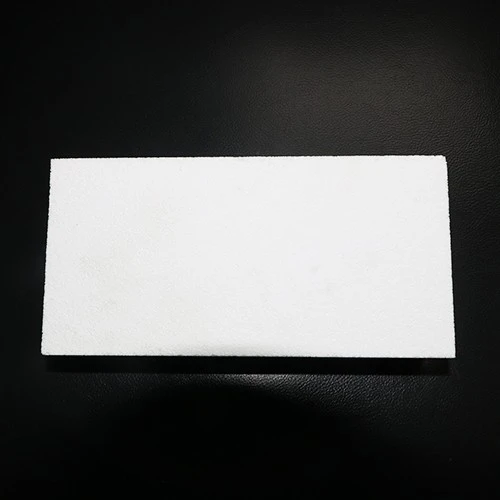
But the extrusion method also has its limitations. Since the paste has a certain moisture content, there's a risk of shrinkage during the drying and firing process. If the shrinkage isn't controlled properly, it can cause cracks in the brick. Cracks are a big no - no because they can weaken the brick and reduce its insulation performance.
Now, let's talk about how these different structures affect the performance of Mullite Insulation Bricks in real - world applications.
In a kiln, the structure of the brick can determine how well it insulates the heat. A brick with a dense and uniform structure from the dry - pressing method can prevent heat from escaping, which means less energy is wasted. On the other hand, a brick with a well - aligned structure from the extrusion method can be used strategically to direct the heat flow within the kiln.
When it comes to choosing the right molding method, it really depends on the specific requirements of the application. If high strength is the top priority, the dry - pressing method might be a better choice. But if a uniform cross - section and directional thermal conductivity are needed, the extrusion method could be more suitable.
As a Mullite Insulation Brick supplier, we understand the importance of these molding methods and their impact on the brick's structure. We carefully select the molding method based on what our customers need. Whether you're looking for Kiln Refractory Bricks, Mullite Insulation Brick, or Mullite Refractory Bricks, we've got you covered.
If you're in the market for high - quality Mullite Insulation Bricks, we'd love to have a chat with you. We can discuss your specific requirements and help you choose the best bricks for your application. Don't hesitate to reach out and start a conversation about your procurement needs.
References
- Smith, J. (2018). "Advanced Refractory Materials and Their Applications". Industrial Materials Journal.
- Brown, A. (2020). "Molding Techniques for High - Temperature Bricks". Manufacturing Science Review.


