


Hey there! As a supplier of Alumina Refractory Bricks, I'm super excited to share with you all about the drying processes for these amazing bricks during production. Alumina Refractory Bricks are widely used in various industries due to their excellent thermal and mechanical properties. But the drying process is a crucial step that can greatly affect the quality of these bricks.
Why Drying is Important
Before we dive into the drying processes, let's talk about why drying is so important. When Alumina Refractory Bricks are initially formed, they contain a significant amount of moisture. If this moisture isn't removed properly, it can cause a whole bunch of problems. For example, during the firing process, the remaining moisture can turn into steam. This steam can build up pressure inside the bricks, leading to cracking or even explosion. Also, excessive moisture can affect the density and strength of the bricks, reducing their overall performance.
Natural Drying
One of the simplest and oldest methods of drying Alumina Refractory Bricks is natural drying. This process involves simply leaving the newly formed bricks in the open air for a certain period. The bricks are usually placed on pallets or racks to allow air to circulate around them.
The advantage of natural drying is that it's very cost - effective. You don't need any special equipment, just some space and time. However, it has its limitations. The drying rate depends on the weather conditions. In humid weather, the drying process can be extremely slow. And there's also a risk of the bricks getting damaged by rain or other environmental factors.
Natural drying is often used as a preliminary step before more advanced drying methods. It can remove a large portion of the surface moisture, making the subsequent drying processes more efficient.
Artificial Drying
Hot Air Drying
Hot air drying is one of the most commonly used artificial drying methods. In this process, hot air is blown over the bricks to remove the moisture. The hot air can be generated by various means, such as gas burners or electric heaters.
The temperature and flow rate of the hot air can be controlled precisely. Generally, the temperature is gradually increased to avoid sudden changes that could cause cracking. For Alumina Refractory Bricks, the initial temperature might be around 50 - 60°C and then gradually increased to 150 - 200°C.
The advantage of hot air drying is that it's relatively fast and can be carried out regardless of the weather conditions. It can also be easily integrated into the production line. However, it consumes a significant amount of energy, which can increase the production cost.

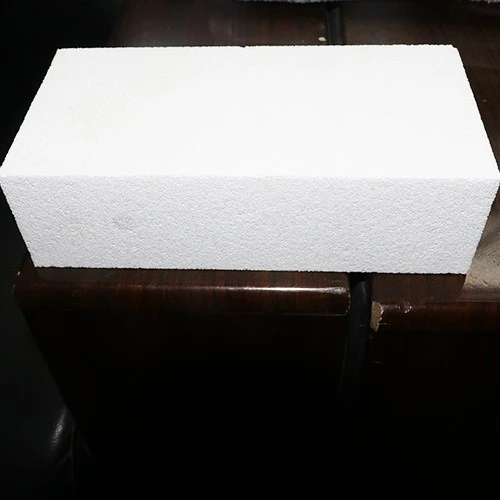
Microwave Drying
Microwave drying is a more advanced drying method. Microwaves are electromagnetic waves that can penetrate the bricks and heat the water molecules directly. This causes the water to evaporate quickly from the inside of the bricks.
The main advantage of microwave drying is its high efficiency. It can dry the bricks much faster than hot air drying, sometimes in a matter of minutes. Also, since the heating is uniform from the inside out, it reduces the risk of cracking.
However, microwave drying equipment is quite expensive. And there are some safety concerns associated with the use of microwaves. Special precautions need to be taken to ensure that the operators are not exposed to harmful radiation.
Vacuum Drying
Vacuum drying is another option for drying Alumina Refractory Bricks. In a vacuum environment, the boiling point of water is significantly reduced. This means that the bricks can be dried at a lower temperature, which is beneficial for the quality of the bricks.
The bricks are placed in a vacuum chamber, and the pressure is reduced. At the same time, a small amount of heat is applied to speed up the evaporation process. Vacuum drying can effectively remove the moisture from the bricks without causing thermal stress.
But the equipment for vacuum drying is complex and expensive. And the production capacity is relatively low compared to other methods. So, it's usually used for high - quality or special - shaped Alumina Refractory Bricks.
Combining Drying Methods
In many cases, a combination of different drying methods is used to achieve the best results. For example, natural drying can be used first to remove the surface moisture. Then, hot air drying can be used to further reduce the moisture content. Finally, microwave drying or vacuum drying can be used for the final drying to ensure that the bricks reach the desired moisture level.
This combination approach can take advantage of the strengths of each method while minimizing their weaknesses. It can improve the quality of the Alumina Refractory Bricks, increase the production efficiency, and reduce the overall production cost.
Quality Control during Drying
Throughout the drying process, quality control is essential. The moisture content of the bricks needs to be monitored regularly. This can be done using moisture meters or other testing equipment.
The appearance of the bricks also needs to be inspected. Any signs of cracking, warping, or other defects should be detected early and addressed. If a large number of bricks have defects, it might indicate that there's a problem with the drying process, such as incorrect temperature settings or uneven air flow.
Conclusion
In conclusion, the drying process for Alumina Refractory Bricks is a critical step in their production. There are various drying methods available, each with its own advantages and disadvantages. By choosing the right drying method or a combination of methods, and implementing strict quality control measures, we can produce high - quality Alumina Refractory Bricks.
If you're in the market for Alumina Refractory Bricks, Fire Bricks, or Mullite Insulation Brick, I'd be more than happy to have a chat with you. Whether you need advice on the right type of bricks for your application or want to discuss the production process in more detail, don't hesitate to reach out. Let's work together to find the best solution for your needs.
References
- Perry, R. H., & Green, D. W. (2008). Perry's Chemical Engineers' Handbook. McGraw - Hill.
- Reed, J. S. (1995). Principles of Ceramic Processing. Wiley.


