


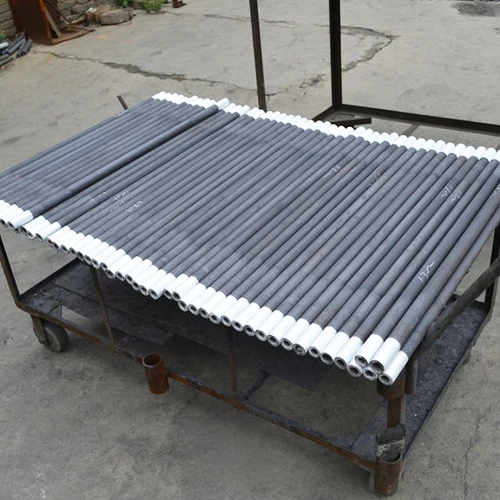
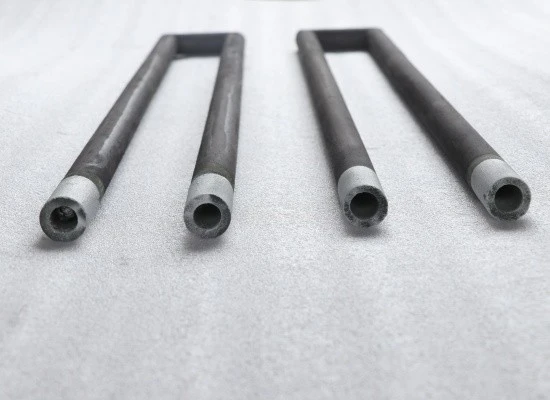
Silicon carbide (SiC) bars are known for their exceptional properties, such as high hardness, excellent thermal conductivity, and remarkable chemical resistance. These properties make them highly sought - after in various industries, including semiconductor manufacturing, metallurgy, and high - temperature furnaces. As a supplier of Silicon Carbide Bar, understanding the most suitable machining processes for silicon carbide bars is crucial to meet the diverse needs of our customers.
Grinding
Grinding is one of the most common machining processes for silicon carbide bars. Due to the high hardness of silicon carbide (it has a Mohs hardness of about 9.5), traditional machining methods like turning or milling are often ineffective. Grinding uses abrasive wheels to remove material from the surface of the silicon carbide bar.
The abrasive wheels used in grinding silicon carbide bars typically contain diamond or cubic boron nitride (CBN) abrasives. Diamond is extremely hard and is well - suited for grinding silicon carbide. The grinding process can be divided into two main types: surface grinding and cylindrical grinding.
Surface grinding is used to create a flat and smooth surface on the silicon carbide bar. This is important when the bar needs to be used in applications where a precise flatness is required, such as in semiconductor wafer processing equipment. In surface grinding, the silicon carbide bar is placed on a worktable, and the abrasive wheel rotates and moves across the surface of the bar to remove material.
Cylindrical grinding, on the other hand, is used to produce a cylindrical shape on the silicon carbide bar. This is useful when the bar is used as a shaft or a rod in mechanical systems. The bar is rotated on its axis while the abrasive wheel moves along the length of the bar to grind the outer surface.
One of the challenges in grinding silicon carbide bars is the generation of heat. Since silicon carbide has a relatively low coefficient of thermal expansion, excessive heat can cause cracking or warping of the bar. To overcome this, coolant is often used during the grinding process. The coolant helps to dissipate the heat and also flushes away the abrasive particles and chips generated during grinding.
Electrical Discharge Machining (EDM)
Electrical Discharge Machining is another viable option for machining silicon carbide bars, especially when complex shapes need to be created. EDM works by using electrical discharges to erode material from the workpiece.
In EDM, a tool electrode is brought close to the silicon carbide bar, and a voltage is applied between the tool and the bar. When the voltage is high enough, an electrical discharge occurs in the dielectric fluid (usually a hydrocarbon - based oil) between the tool and the bar. This discharge generates a high - temperature plasma that melts and vaporizes a small amount of material from the bar.
There are two main types of EDM: wire EDM and sinker EDM. Wire EDM uses a thin wire as the tool electrode. The wire is fed through the silicon carbide bar, and the electrical discharges between the wire and the bar cut the bar into the desired shape. This process is very precise and can be used to create intricate shapes with high accuracy.
Sinker EDM, on the other hand, uses a shaped tool electrode. The tool electrode is made in the inverse shape of the desired cavity or feature on the silicon carbide bar. The tool is then brought close to the bar, and the electrical discharges erode the material from the bar to create the desired shape.
EDM has several advantages for machining silicon carbide bars. It can machine materials with high hardness without the need for traditional cutting tools, which can wear out quickly when machining silicon carbide. Also, since EDM is a non - contact machining process, there is no mechanical force applied to the bar, reducing the risk of cracking or chipping.
Laser Machining
Laser machining is a relatively new and promising process for machining silicon carbide bars. Laser machining uses a high - energy laser beam to melt, vaporize, or ablate material from the surface of the bar.
There are different types of lasers that can be used for machining silicon carbide, such as CO₂ lasers, Nd:YAG lasers, and fiber lasers. CO₂ lasers have a wavelength of around 10.6 micrometers and are absorbed well by silicon carbide. The laser beam is focused on the surface of the bar, and the high - energy photons in the beam heat and vaporize the material.
Laser machining offers several advantages. It is a non - contact process, which means there is no mechanical stress on the silicon carbide bar. This is particularly important for thin or brittle bars. Laser machining can also achieve very high precision and can create small features with high accuracy.
However, laser machining also has some limitations. The high - energy laser beam can cause thermal damage to the silicon carbide bar, such as the formation of a heat - affected zone (HAZ). The HAZ can have different properties from the original material, which may affect the performance of the bar in some applications. To minimize the HAZ, techniques such as pulsed laser machining can be used, where the laser beam is delivered in short pulses to reduce the heat input.
Ultrasonic Machining
Ultrasonic machining is a process that uses high - frequency vibrations to remove material from the silicon carbide bar. In ultrasonic machining, a tool is vibrated at an ultrasonic frequency (usually between 15 - 30 kHz) in a slurry of abrasive particles and water.
The vibrating tool transfers the ultrasonic energy to the abrasive particles in the slurry. The abrasive particles then impact the surface of the silicon carbide bar, causing small chips of material to be removed. The shape of the tool determines the shape of the machined feature on the bar.
Ultrasonic machining is suitable for machining hard and brittle materials like silicon carbide. It can be used to create holes, slots, and other complex features in the bar. One of the advantages of ultrasonic machining is that it can achieve a relatively high material removal rate without causing significant thermal or mechanical damage to the bar.
However, ultrasonic machining also has some drawbacks. The process is relatively slow compared to some other machining methods, and the accuracy of the machined features may be limited. Also, the abrasive slurry needs to be carefully controlled to ensure consistent machining results.
Considerations for Selecting the Machining Process
When selecting the most suitable machining process for silicon carbide bars, several factors need to be considered.
Material Properties: The hardness, brittleness, and thermal properties of silicon carbide play a crucial role in the selection of the machining process. For example, if the bar has a high brittleness, non - contact machining processes like EDM or laser machining may be more suitable to avoid cracking.
Shape and Complexity of the Part: If the bar needs to have a simple cylindrical or flat shape, grinding may be the most appropriate process. However, if complex shapes or intricate features are required, EDM or laser machining may be better options.
Surface Finish Requirements: Different machining processes can produce different surface finishes. For applications where a smooth surface finish is required, such as in optical components, grinding or laser machining may be preferred.
Production Volume: For high - volume production, processes that offer high material removal rates and good repeatability, such as grinding or ultrasonic machining, may be more suitable. For low - volume or prototype production, processes that can quickly create complex shapes with high precision, like EDM or laser machining, may be a better choice.
As a supplier of Silicon Carbide Bar, we understand the importance of providing high - quality machined products to our customers. Our team of experts can help you select the most suitable machining process based on your specific requirements. Whether you need Sic Heating Element or Silicon Carbide Rod Heaters, we are committed to delivering products that meet your expectations.
If you are interested in purchasing silicon carbide bars or have any questions about the machining processes, please feel free to contact us for a detailed discussion. We look forward to working with you to meet your silicon carbide bar needs.
References
- Kalpakjian, S., & Schmid, S. R. (2008). Manufacturing Engineering and Technology. Pearson Prentice Hall.
- Rao, P. N. (2007). Manufacturing Technology: Metal Cutting and Machine Tools. Tata McGraw - Hill Education.
- Trumper, D. L. (2009). Precision Machine Design. Cambridge University Press.


