
As a supplier of Mullite Insulation Bricks, ensuring the high - quality of our products is of utmost importance. Mullite Insulation Bricks are widely used in various high - temperature industrial applications due to their excellent thermal insulation properties, high refractoriness, and good chemical stability. In this blog, I will share some effective methods to test the quality of Mullite Insulation Bricks.
1. Physical Property Tests
Bulk Density and Porosity
Bulk density is an important physical property that reflects the compactness of the brick. A lower bulk density generally indicates better insulation performance, as there are more pores within the brick to trap air, which is a poor conductor of heat. To measure the bulk density, we first weigh the dry brick accurately using a high - precision balance. Then, we measure its dimensions (length, width, and height) with a caliper and calculate the volume. The bulk density is then obtained by dividing the mass by the volume.
Porosity is closely related to bulk density. There are several methods to measure porosity, such as the water saturation method. In this method, the dry brick is first weighed. Then it is immersed in water under a vacuum to ensure that all the pores are filled with water. After that, the saturated brick is weighed again. The difference in weight before and after saturation represents the weight of water absorbed, which is related to the volume of pores. By comparing the volume of pores with the total volume of the brick, we can calculate the porosity. A high - quality Mullite Insulation Brick should have an appropriate level of porosity, typically between 40% - 60%, to achieve a good balance between insulation and mechanical strength.
Thermal Conductivity
Thermal conductivity is a key parameter for insulation materials. It measures the ability of the material to conduct heat. A lower thermal conductivity means better insulation performance. There are several techniques to measure the thermal conductivity of Mullite Insulation Bricks. One of the most common methods is the guarded hot plate method. In this setup, the brick is placed between a heated plate and a cooled plate. The heat flow through the brick is measured, along with the temperature difference between the two plates. The thermal conductivity can then be calculated using Fourier's law of heat conduction. For high - quality Mullite Insulation Bricks, the thermal conductivity should be as low as possible, usually in the range of 0.2 - 0.5 W/(m·K) at room temperature.
2. Chemical Composition Analysis
X - Ray Fluorescence (XRF)
X - Ray Fluorescence is a non - destructive analytical technique used to determine the elemental composition of the Mullite Insulation Brick. By irradiating the sample with X - rays, the atoms in the material emit characteristic fluorescent X - rays. The energy and intensity of these fluorescent X - rays are measured, which allows us to identify and quantify the elements present in the brick. For Mullite Insulation Bricks, the main components are alumina (Al₂O₃) and silica (SiO₂). A high - quality brick should have a proper ratio of these two components, typically around 70% - 80% alumina and 20% - 30% silica. Other elements such as iron (Fe), titanium (Ti), and calcium (Ca) should be present in very small amounts, as they can affect the refractoriness and chemical stability of the brick.
X - Ray Diffraction (XRD)
X - Ray Diffraction is used to identify the crystalline phases present in the Mullite Insulation Brick. Mullite is a crystalline compound with a specific crystal structure. By analyzing the diffraction pattern of X - rays scattered by the sample, we can determine the presence and proportion of mullite phase, as well as other possible phases such as corundum or quartz. A high - quality brick should have a high proportion of mullite phase, which is responsible for its excellent high - temperature properties.
3. Mechanical Property Tests
Compressive Strength
Compressive strength is an important mechanical property that indicates the ability of the brick to withstand pressure. In industrial applications, Mullite Insulation Bricks may be subjected to various mechanical loads, such as the weight of the furnace lining or the pressure from the surrounding materials. To measure the compressive strength, a cylindrical or cubic sample of the brick is prepared and placed in a compression testing machine. The machine applies a gradually increasing load until the sample fails. The compressive strength is calculated by dividing the maximum load by the cross - sectional area of the sample. A high - quality Mullite Insulation Brick should have a compressive strength of at least 10 - 20 MPa, depending on the specific application.
Flexural Strength
Flexural strength measures the ability of the brick to resist bending. In some cases, the bricks may be subjected to bending forces, for example, when they are installed in a curved furnace lining. To measure the flexural strength, a rectangular sample of the brick is placed on two supports and a load is applied at the center of the sample. The flexural strength is calculated based on the maximum load and the dimensions of the sample. A good - quality brick should have an appropriate flexural strength to ensure its integrity during installation and use.
4. Thermal Stability Tests
Thermal Shock Resistance
Thermal shock resistance is crucial for Mullite Insulation Bricks, as they are often exposed to rapid temperature changes in industrial furnaces. To test the thermal shock resistance, the brick is heated to a high temperature (e.g., 1000°C) and then rapidly cooled, for example, by quenching in water or air. This heating - cooling cycle is repeated several times, and the brick is inspected for cracks or damage after each cycle. A high - quality brick should be able to withstand multiple thermal shock cycles without significant damage.
Refractoriness
Refractoriness is the ability of the brick to withstand high temperatures without melting or deforming. It is determined by heating the brick in a high - temperature furnace at a controlled rate until it starts to deform. The temperature at which the brick deforms is recorded as its refractoriness. For Mullite Insulation Bricks, the refractoriness should be at least 1700°C, which ensures their performance in high - temperature industrial applications.
Related Products
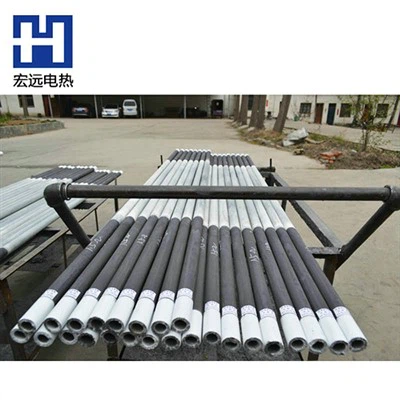
In addition to Mullite Insulation Bricks, we also offer other high - quality products such as Sic Heating Elements, DB Type Sic Rod, and ED Type Silicon Carbide Rod. These products are widely used in various industries and can work well in combination with our Mullite Insulation Bricks.


Conclusion
Testing the quality of Mullite Insulation Bricks is a comprehensive process that involves physical, chemical, mechanical, and thermal property tests. By conducting these tests, we can ensure that our products meet the high standards required by our customers. As a reliable supplier, we are committed to providing the best - quality Mullite Insulation Bricks and related products. If you are interested in our products or have any questions about the quality testing process, please feel free to contact us for further discussion and potential procurement.
References
- ASTM International. Standard Test Methods for Physical Testing of Refractory Materials.
- ISO Standards for Refractory Products.
- Technical literature on Mullite Insulation Bricks from industry associations.