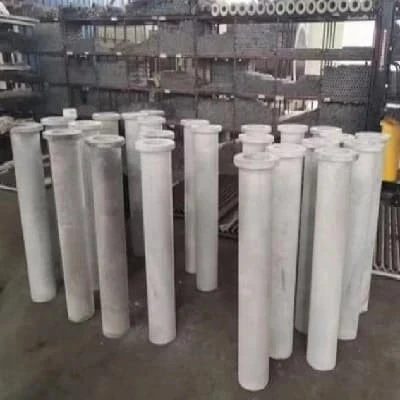
Silicon carbide (SiC) heating elements and metal heating elements are both widely used in industrial furnaces. However, their different materials and electrical characteristics result in significant differences in operating temperature, resistance behavior, service conditions, and applications.
First, the materials are different. SiC heating elements are non-metallic heating elements mainly made from silicon carbide, while metal heating elements are typically manufactured from alloys such as nickel-chromium or iron-chromium-aluminum.
Second, their operating temperature ranges are different. SiC heating elements offer excellent high-temperature stability and are suitable for demanding high-temperature industrial heating applications. The maximum operating temperature of metal heating elements is generally limited by factors such as alloy melting point, oxidation resistance, and mechanical strength. Therefore, SiC elements can offer advantages in certain high-temperature sintering and heat-treatment applications.
Third, their resistance characteristics are different. The electrical resistance of SiC heating elements changes with temperature and typically increases gradually during long-term operation due to resistance aging. As a result, operating voltage may need to be adjusted to compensate for power loss. Metal heating elements also exhibit temperature-dependent resistance, but their resistance behavior differs significantly from that of SiC elements.
Fourth, their service conditions are different. When SiC heating elements operate at high temperatures in air, a protective oxide layer can form on their surface. However, furnace atmosphere, corrosive gases, temperature cycling, and surface loading can all affect service life. Metal heating elements are also affected by oxidation and corrosion, with different alloys offering different levels of resistance to specific operating environments.
Finally, their applications are somewhat different. SiC heating elements are widely used in ceramic firing, refractory processing, electronic materials, powder processing, metallurgy, and high-temperature sintering furnaces. Metal heating elements are commonly used in ovens, heat-treatment equipment, laboratory furnaces, and various low- and medium-temperature heating systems.
Overall, SiC heating elements are particularly suitable for high-temperature, high-power, and continuous industrial heating applications, while metal heating elements offer advantages in low- and medium-temperature heating, flexible configurations, and certain specialized environments. The appropriate heating element should be selected according to furnace temperature, atmosphere, required power, equipment design, and actual operating conditions.