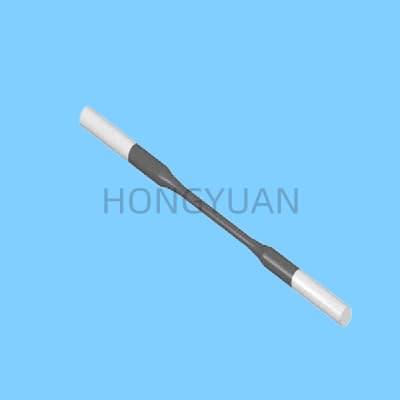
Silicon carbide (SiC) heating elements, also known as silicon carbide rods, are widely used as high-temperature electric heating components in industrial furnaces, ceramic kilns, laboratory furnaces, glass processing equipment, and heat treatment systems.
Due to their high-temperature capability, oxidation resistance, long service life, and stable heating performance, SiC heating elements have become one of the most commonly used heating solutions for high-temperature applications.
1. Working Principle of Silicon Carbide Heating Elements
Silicon carbide heating elements work based on the principle of electrical resistance heating.
When an electric current passes through the silicon carbide material, electrical energy is converted into heat energy:
Electrical Energy → Resistance Heat → Heat Radiation and Heat Transfer
According to Joule's heating law:
Q = I²Rt
where:
Q represents the generated heat;
I represents the operating current;
R represents the electrical resistance;
t represents the heating time.
Because silicon carbide has a certain electrical resistance, heat is generated when current flows through the element. The element temperature increases, and heat is transferred to the furnace chamber and workpieces through thermal radiation and conduction.
This process provides a stable heat source for high-temperature industrial heating applications.
2. Why Can SiC Heating Elements Operate at High Temperatures?
The excellent performance of SiC heating elements mainly comes from the properties of silicon carbide material.
High Temperature Stability
Silicon carbide has excellent thermal stability and can maintain reliable performance under high-temperature conditions. It is widely used in furnaces operating above 1000°C.
Good Oxidation Resistance
When operating in an air atmosphere, a protective silicon dioxide (SiO₂) layer forms on the surface of the SiC element. This protective layer helps slow down oxidation and extends the service life of the heating element.
Stable Electrical Properties
Silicon carbide has predictable electrical resistance characteristics, allowing the heating power to be controlled through proper voltage and current adjustment.
3. Basic Structure of a Silicon Carbide Heating Element
A typical SiC heating element consists of three main parts:
3.1 Hot Zone
The hot zone is the main heating section of the element.
It has higher electrical resistance and generates most of the heat when electric current passes through it.
Important parameters include:
Hot-zone length;
Hot-zone diameter;
Operating temperature;
Surface loading.
The hot zone is normally installed inside the effective heating area of the furnace.
3.2 Cold Ends
The cold ends are located at both ends of the heating element and are used for electrical connection.
Compared with the hot zone, the cold ends have lower resistance and generate less heat. Their main purpose is to reduce temperature at the connection area and provide reliable electrical contact outside the furnace chamber.
Cold-end dimensions depend on:
Furnace wall thickness;
Installation method;
Electrical connection requirements.
3.3 Terminal Connection Area
The terminal area connects the SiC element to the power supply system.
Common connection methods include:
Aluminum braid connections;
Aluminum clips;
Special terminal clamps.
A reliable connection is important because poor contact may increase resistance and cause overheating.
4. Common Types of SiC Heating Elements
According to their shape and installation method, SiC heating elements are available in several designs.
Straight Type SiC Heating Elements
Straight rods are the most common type.
Advantages:
Simple structure;
Easy installation;
Easy replacement;
Suitable for many industrial furnaces.
U-Type SiC Heating Elements
U-shaped elements have both terminals on the same side.
Advantages:
Require fewer furnace wall openings;
Convenient electrical connection;
Suitable for limited installation space.
W-Type SiC Heating Elements
W-shaped elements provide a larger heating area and higher power output.
Advantages:
Higher heating capacity;
Suitable for large furnaces and applications requiring higher power density.
Customized SiC Heating Elements
For special furnace designs, customized sizes and shapes can be manufactured according to customer requirements.
5. Resistance Aging Characteristics of SiC Heating Elements
One important characteristic of silicon carbide heating elements is resistance aging.
During long-term operation, the electrical resistance of SiC elements gradually increases.
As resistance increases:
The output power decreases;
Heating speed may become slower;
Higher operating voltage may be required.
Therefore, industrial furnaces using SiC heating elements are usually equipped with adjustable power systems, such as voltage regulators or automatic control systems, to compensate for resistance changes during service.
6. Factors Affecting SiC Heating Element Performance
The performance and service life of SiC heating elements depend on several factors:
Furnace operating temperature;
Furnace atmosphere;
Power control method;
Surface loading;
Installation design;
Furnace insulation performance;
Operating and maintenance conditions.
Proper selection, installation, and operation are essential for achieving stable furnace performance and longer heating element life.
Conclusion
Silicon carbide heating elements are high-temperature resistance heaters that convert electrical energy into heat through the resistance heating principle.
A typical SiC heating element consists of a hot zone, cold ends, and terminal connection areas. The hot zone generates heat, while the cold ends provide electrical connection and reduce heat transfer to the outside of the furnace.
Understanding the working principle and structure of SiC heating elements helps furnace manufacturers and end users select the right heating solution, improve furnace efficiency, and extend element service life.
When selecting SiC heating elements, factors such as furnace temperature, furnace design, power supply, installation dimensions, and operating environment should be carefully considered.