
Silicon carbide (SiC) has long been a subject of interest in the materials science community, often sparking debates about its classification. One of the most frequently asked questions is: Is silicon carbide a ceramic? As a silicon carbide supplier, I am well - versed in the properties and characteristics of this remarkable material, and I'm here to shed some light on this topic.
Understanding Ceramics
Before delving into whether silicon carbide is a ceramic, it's essential to understand what ceramics are. Ceramics are inorganic, non - metallic materials that are typically hard, brittle, and heat - resistant. They are made by heating and shaping raw materials, usually clay or other mineral compounds, at high temperatures. Traditional ceramics include materials like porcelain, earthenware, and bricks. However, modern ceramics have expanded to include a wide range of advanced materials with unique properties.
Properties of Silicon Carbide
Silicon carbide is a compound of silicon and carbon. It has several distinctive properties that make it stand out:
- Hardness: Silicon carbide is extremely hard, second only to diamond on the Mohs scale of hardness. This property makes it ideal for applications where wear resistance is crucial, such as in cutting tools, abrasives, and grinding wheels.
- High - Temperature Resistance: SiC can withstand very high temperatures without significant degradation. It has a high melting point (around 2730°C), which allows it to be used in high - temperature environments like furnaces and kilns.
- Chemical Inertness: Silicon carbide is chemically stable and resistant to many chemicals, including acids and alkalis. This makes it suitable for use in chemical processing industries.
- Electrical Conductivity: Depending on its structure and doping, silicon carbide can exhibit either semiconducting or insulating properties. This versatility in electrical conductivity makes it valuable in electronic applications, such as power electronics and high - frequency devices.
Why Silicon Carbide is Considered a Ceramic
Based on the definition of ceramics, silicon carbide fits the criteria in many ways:


- Inorganic and Non - Metallic: Silicon carbide is an inorganic compound composed of silicon and carbon, which are non - metallic elements. This aligns with the basic definition of ceramics as inorganic, non - metallic materials.
- High - Temperature Processing: Silicon carbide is typically produced through high - temperature processes. One common method is the Acheson process, where silica sand and carbon are heated to around 2000 - 2500°C. This high - temperature treatment is similar to the manufacturing processes used for traditional ceramics.
- Brittleness: Like many ceramics, silicon carbide is brittle. It has a low fracture toughness, which means it can break easily under stress. This brittleness is a characteristic feature of ceramics.
Applications of Silicon Carbide as a Ceramic
Silicon carbide's ceramic nature makes it suitable for a wide range of applications:
- Abrasive Applications: Due to its hardness, silicon carbide is widely used as an abrasive material. It is used in sandpaper, grinding wheels, and cutting tools. For example, Silicon Carbide Rod can be used in abrasive machining operations to shape and finish various materials.
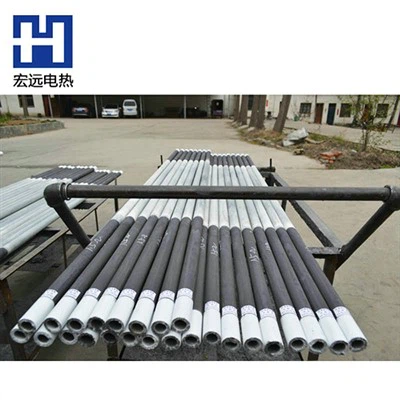
- High - Temperature Applications: In high - temperature environments, silicon carbide's excellent thermal stability makes it a preferred material. It is used in furnace linings, heating elements, and kiln furniture. The Linear Type Silicon Carbide Rod Coated is an example of a silicon carbide product used for electric heating in high - temperature applications.
- Electronic Applications: In the electronics industry, silicon carbide's semiconducting properties are exploited. It is used in power devices, such as diodes and transistors, to improve efficiency and performance. The Sic Heating Element is also relevant in electronic heating applications.
Contrasting Views and Exceptions
While most experts agree that silicon carbide is a ceramic, there are some nuances to consider. Some might argue that silicon carbide's unique properties, such as its electrical conductivity, set it apart from traditional ceramics. In traditional ceramics, electrical conductivity is usually very low, while silicon carbide can be engineered to have specific electrical properties. However, this does not disqualify it from being a ceramic. Instead, it highlights the versatility of modern ceramics and the ability to tailor their properties for different applications.
Conclusion
In conclusion, silicon carbide can be classified as a ceramic. Its inorganic and non - metallic nature, high - temperature processing, and brittleness all align with the characteristics of ceramics. Moreover, its wide range of applications in various industries further solidifies its position as a valuable ceramic material.
As a silicon carbide supplier, we offer a diverse range of high - quality silicon carbide products to meet the needs of different industries. Whether you are in the abrasive, high - temperature, or electronic industry, our products can provide the performance and reliability you require. If you are interested in purchasing silicon carbide products for your specific application, we invite you to contact us for a detailed discussion. We are committed to providing you with the best solutions and excellent customer service.
References
- "Ceramics: Structure, Properties, Processing, and Design" by David W. Richerson.
- "Silicon Carbide: Properties, Processing, and Applications in Electronic Devices" edited by George L. Harris.
- "Handbook of Advanced Ceramics: Materials, Applications, Processing" edited by Susumu Saito.