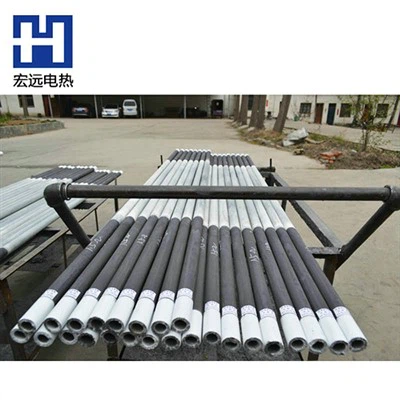

What is the Young's modulus of MoSi2 heating elements?
As a supplier of MoSi2 heating elements, I often encounter inquiries about the technical properties of these essential components. One frequently asked question is about the Young's modulus of MoSi2 heating elements. In this blog, I will delve into what the Young's modulus is, its significance for MoSi2 heating elements, and how it impacts their performance.
Understanding Young's Modulus
Young's modulus, also known as the modulus of elasticity, is a fundamental mechanical property that measures the stiffness of a material. It is defined as the ratio of stress (force per unit area) to strain (deformation per unit length) within the elastic limit of a material. Mathematically, it is expressed as:
[E=\frac{\sigma}{\epsilon}]
where (E) is the Young's modulus, (\sigma) is the stress, and (\epsilon) is the strain.
A high Young's modulus indicates that a material is stiff and resistant to deformation, while a low Young's modulus means the material is more flexible. This property is crucial in engineering applications as it helps predict how a material will behave under different loads.
Young's Modulus of MoSi2
Molybdenum disilicide (MoSi2) is a refractory intermetallic compound known for its high melting point, excellent oxidation resistance, and good electrical conductivity. These properties make it an ideal material for heating elements used in high - temperature applications.
The Young's modulus of MoSi2 typically ranges from about 220 - 320 GPa. This relatively high value indicates that MoSi2 is a stiff material, which is beneficial for maintaining the shape and structural integrity of heating elements under high - temperature conditions.

The stiffness provided by the high Young's modulus allows MoSi2 heating elements to withstand thermal stresses that occur during heating and cooling cycles. When a heating element is heated, it expands, and when it cools, it contracts. If the material is not stiff enough, these thermal expansions and contractions can cause the element to deform, crack, or break, leading to a shorter lifespan and reduced performance.
Significance for MoSi2 Heating Elements
The high Young's modulus of MoSi2 has several implications for the performance and application of heating elements:
- Thermal Stability: MoSi2 heating elements can maintain their shape and dimensions even at high temperatures. This is crucial for applications where precise temperature control and consistent heat distribution are required. For example, in industrial furnaces used for heat treatment of metals, the stability of the heating elements ensures uniform heating of the workpieces.
- Resistance to Mechanical Stress: The stiffness of MoSi2 helps the heating elements resist mechanical stresses caused by handling, installation, and vibrations. This reduces the risk of damage during these processes and extends the service life of the elements.
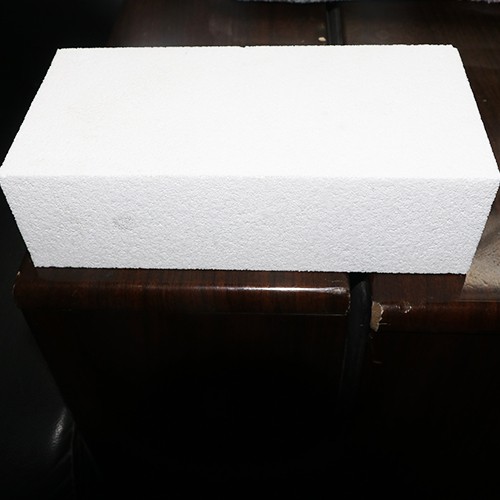
- Compatibility with Furnace Structures: The high Young's modulus allows MoSi2 heating elements to be used in conjunction with other furnace components such as Silicon Carbide Roller and Mullite Refractory Bricks. These components often have different thermal expansion coefficients, and the stiffness of MoSi2 helps to minimize the differential expansion and contraction, reducing the risk of damage to the furnace structure.
Factors Affecting the Young's Modulus of MoSi2
The Young's modulus of MoSi2 can be influenced by several factors, including:
- Purity: Higher purity MoSi2 generally has a more consistent crystal structure, which can result in a higher and more predictable Young's modulus. Impurities can disrupt the crystal lattice and reduce the stiffness of the material.
- Microstructure: The grain size and orientation of the MoSi2 crystals can affect its mechanical properties. Finer grain sizes and a more uniform microstructure can lead to a higher Young's modulus.
- Temperature: The Young's modulus of MoSi2 decreases with increasing temperature. At high temperatures, the atomic bonds in the material become more flexible, reducing the stiffness of the material. However, MoSi2 still maintains a relatively high Young's modulus even at elevated temperatures, which is one of the reasons it is suitable for high - temperature applications.
Applications of MoSi2 Heating Elements
MoSi2 heating elements are widely used in various industries due to their excellent properties. Some common applications include:
- Industrial Furnaces: MoSi2 heating elements are used in high - temperature industrial furnaces for processes such as metal heat treatment, glass melting, and ceramic firing. Their high Young's modulus ensures that they can withstand the thermal and mechanical stresses associated with these high - temperature processes.
- Laboratory Equipment: In laboratories, MoSi2 heating elements are used in furnaces and ovens for research and testing purposes. Their stability and high - temperature performance make them ideal for precise temperature control in scientific experiments.
- Semiconductor Manufacturing: The semiconductor industry requires high - temperature processing steps, and MoSi2 heating elements are used in equipment such as diffusion furnaces and annealing ovens. The high Young's modulus helps to maintain the shape and performance of the heating elements during these critical processes.
Conclusion
The Young's modulus of MoSi2 heating elements is a crucial property that affects their performance and durability. With a relatively high Young's modulus, MoSi2 heating elements can withstand thermal and mechanical stresses, ensuring stable and reliable operation in high - temperature applications. As a supplier of MoSi2 heating elements, we understand the importance of this property and ensure that our products meet the highest quality standards.
If you are in the market for high - quality MoSi2 heating elements or other related products such as Molybdenum Heating Element, feel free to contact us for more information and to discuss your specific requirements. We are committed to providing you with the best solutions for your heating needs.
References
- Callister, W. D., & Rethwisch, D. G. (2014). Materials Science and Engineering: An Introduction. Wiley.
- Kingery, W. D., Bowen, H. K., & Uhlmann, D. R. (1976). Introduction to Ceramics. Wiley.