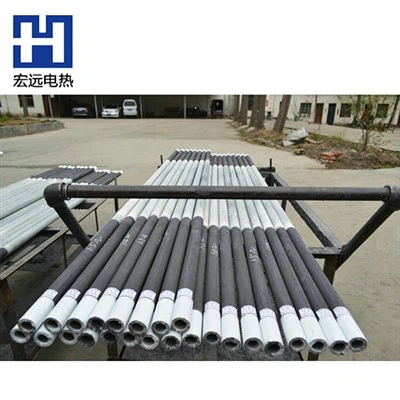

When it comes to industrial heating applications, silicon carbide rod heaters are a popular choice due to their high-temperature resistance, excellent thermal conductivity, and long service life. As a dedicated supplier of Silicon Carbide Rod Heaters, I am often asked about the length of these heaters. In this blog post, I will delve into the common lengths of silicon carbide rod heaters, factors that influence these lengths, and their implications for various industrial uses.
Common Lengths of Silicon Carbide Rod Heaters
Silicon carbide rod heaters come in a variety of lengths to meet the diverse needs of different industrial processes. The most common lengths typically range from a few hundred millimeters to several meters. However, the exact length can vary depending on the specific requirements of the heating application.
For smaller-scale industrial processes or laboratory equipment, shorter silicon carbide rod heaters are often used. These can have lengths starting from around 200 mm. Shorter rods are suitable for applications where space is limited or where a more concentrated heat source is required. For example, in some small-scale heat treatment furnaces or in certain types of chemical reactors, shorter rods can provide the necessary heat in a confined space.
On the other hand, for larger industrial furnaces used in steelmaking, glass manufacturing, or ceramic firing, longer silicon carbide rod heaters are preferred. Lengths of up to 2 meters or more are not uncommon in these applications. Longer rods can cover a larger heating area, ensuring uniform heating across a larger volume. This is crucial in industries where consistent temperature distribution is essential for the quality of the final product.
Factors Influencing the Length of Silicon Carbide Rod Heaters
Several factors play a role in determining the appropriate length of a silicon carbide rod heater for a particular application:


- Furnace Size and Design: The physical dimensions of the furnace are a primary consideration. The heater must fit within the available space while providing sufficient heat coverage. For example, a large industrial furnace with a wide and long chamber will require longer rods to ensure that the entire interior is heated evenly. Conversely, a small, compact furnace will need shorter rods to fit within its limited dimensions.
- Heating Requirements: The temperature and heat output needed for the specific industrial process also influence the rod length. Higher heat requirements may necessitate longer rods to generate the necessary amount of heat. In addition, the desired temperature uniformity within the furnace can affect the choice of rod length. If precise temperature control is required across a large area, longer rods may be used to distribute the heat more evenly.
- Electrical Power Supply: The electrical characteristics of the power supply available for the heater are important. Longer rods generally have higher resistance, which means they require a different electrical configuration compared to shorter rods. The power supply must be able to provide the appropriate voltage and current to ensure the proper operation of the heater. If the power supply has limitations, the length of the rod may need to be adjusted accordingly.
- Mechanical Considerations: The mechanical strength of the silicon carbide rod is also a factor. Longer rods are more prone to bending or breaking under their own weight, especially at high temperatures. Therefore, the design of the rod and the support structure within the furnace must be carefully considered to ensure the mechanical stability of longer rods.
Different Types and Their Length Considerations
There are different types of silicon carbide rod heaters, each with its own characteristics and length considerations:
- Linear Type Silicon Carbide Rod Coated: This type of rod is straight and commonly used in a wide range of industrial applications. The length of linear rods can be adjusted based on the specific requirements of the furnace. They are relatively easy to install and can be arranged in parallel or series to achieve the desired heating effect. For applications where a simple and straightforward heating solution is needed, linear rods are a popular choice.
- H Type Silicon Carbide Rod: The H-type design provides additional surface area for heat transfer, which can be beneficial in applications where higher heat output is required. The length of H-type rods is also determined by the furnace size and heating requirements. These rods are often used in larger industrial furnaces where efficient heat distribution is crucial.
Implications for Industrial Applications
The length of the silicon carbide rod heater has significant implications for industrial applications:
- Heating Efficiency: The right length of the rod can improve heating efficiency. Longer rods can cover a larger area, reducing the number of rods needed and minimizing the heat loss between the rods. This results in more efficient use of energy and lower operating costs.
- Product Quality: In industries where product quality is highly dependent on temperature control, such as the production of high-quality ceramics or precision metal parts, the appropriate rod length is essential. Uniform heating provided by properly sized rods ensures consistent product quality and reduces the likelihood of defects.
- Maintenance and Replacement: The length of the rods can also affect maintenance and replacement procedures. Longer rods may require more specialized handling and installation equipment. However, they may also have a longer service life, reducing the frequency of replacement.
Complementary Products and Their Role
In addition to silicon carbide rod heaters, other products such as Mullite Insulation Brick play an important role in industrial heating applications. Mullite insulation bricks are used to line the interior of furnaces, providing thermal insulation and protecting the furnace structure from high temperatures. The combination of silicon carbide rod heaters and mullite insulation bricks can enhance the overall performance and energy efficiency of the furnace.
Conclusion
In conclusion, the length of a common silicon carbide rod heater can vary widely depending on the specific industrial application. Factors such as furnace size, heating requirements, electrical power supply, and mechanical considerations all play a role in determining the appropriate length. By understanding these factors and choosing the right length of rod heater, industrial users can achieve efficient heating, high product quality, and cost savings.
If you are interested in learning more about our Silicon Carbide Rod Heaters or need assistance in selecting the right product for your application, please feel free to contact us. We are committed to providing high-quality heating solutions and excellent customer service. Let's work together to meet your industrial heating needs.
References
- Soufiani, A., & Mujumdar, A. S. (2002). Industrial Drying: Fundamentals and Applications. Elsevier.
- Mills, A. F. (1999). Heat and Mass Transfer. Prentice Hall.