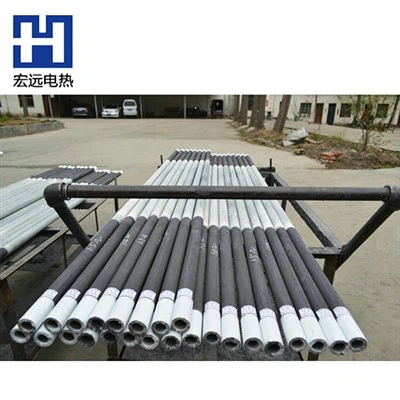

Silicon carbide rods are widely used in various high - temperature industrial applications due to their excellent thermal and electrical properties. One of the critical parameters that significantly affect the performance of silicon carbide rods is porosity. Controlling the porosity of silicon carbide rods is essential for optimizing their mechanical strength, thermal conductivity, and overall service life. As a silicon carbide rod supplier, I'd like to share some insights on how to control the porosity of these important components.
Understanding the Impact of Porosity
Before delving into the control methods, it's important to understand why porosity matters. Porosity can influence several key properties of silicon carbide rods. A higher porosity generally leads to lower mechanical strength, as the material has more voids that can act as stress concentrators. On the other hand, excessive porosity may also increase the oxidation rate of the silicon carbide, reducing its service life in high - temperature and oxidizing environments.
However, a certain level of porosity can be beneficial in some cases. For example, it can improve the thermal shock resistance of the rod by providing space for thermal expansion. Therefore, the goal is to achieve a balanced porosity that meets the specific requirements of the application.
Raw Material Selection
The choice of raw materials is the first step in controlling the porosity of silicon carbide rods. High - purity silicon carbide powder is crucial. The particle size and distribution of the powder have a significant impact on the final porosity.
- Particle Size: Finer silicon carbide powders tend to result in lower porosity. When the particles are smaller, they can pack more closely together during the forming process. This reduces the amount of space between the particles, leading to a denser structure. For example, using sub - micron silicon carbide powders can help in achieving a more compact green body, which will have less porosity after sintering.
- Particle Distribution: A narrow particle size distribution is preferred. If the powder has a wide range of particle sizes, the larger particles may create voids that the smaller particles cannot fill completely. This can lead to higher porosity in the final product. As a supplier, we carefully select silicon carbide powders with well - controlled particle sizes and distributions to ensure consistent porosity in our rods.
Forming Process
The method used to form the silicon carbide rods also plays a vital role in porosity control.
- Extrusion: Extrusion is a common method for manufacturing silicon carbide rods. During extrusion, the silicon carbide powder is mixed with a binder and lubricant to form a plastic mass. The mass is then forced through a die to create the rod shape. The pressure applied during extrusion can affect the porosity. Higher extrusion pressures can compress the particles more tightly, reducing porosity. However, excessive pressure may cause defects in the rod, such as cracks. Therefore, it's necessary to optimize the extrusion pressure based on the properties of the raw materials and the desired dimensions of the rod.
- Isostatic Pressing: Isostatic pressing is another effective forming method. In this process, the silicon carbide powder is placed in a flexible mold and subjected to uniform pressure from all directions. This method can achieve a more uniform density and lower porosity compared to extrusion, especially for complex - shaped rods. However, it is more expensive and time - consuming.
Binder and Additive Selection
Binders and additives are often used in the manufacturing process of silicon carbide rods to improve the formability and green strength of the material. However, they can also affect the porosity.
- Binder: The type and amount of binder used are crucial. Organic binders, such as polyvinyl alcohol (PVA), are commonly used. These binders decompose during the sintering process, leaving behind pores. Therefore, it's important to use the minimum amount of binder necessary to achieve good formability. Additionally, choosing a binder with a low carbon residue can reduce the formation of additional pores due to incomplete decomposition.
- Additives: Some additives can help in controlling porosity. For example, sintering aids can promote the densification of the silicon carbide during sintering, reducing porosity. However, the selection of additives should be carefully considered to avoid introducing impurities that may affect the performance of the rod.
Sintering Process
Sintering is the final and most critical step in controlling the porosity of silicon carbide rods.
- Sintering Temperature: Higher sintering temperatures generally lead to lower porosity. At elevated temperatures, the silicon carbide particles start to diffuse and bond together, filling the voids between them. However, there is a limit to the sintering temperature. If the temperature is too high, it may cause grain growth, which can also affect the mechanical and thermal properties of the rod. Therefore, an optimal sintering temperature needs to be determined based on the composition and particle size of the silicon carbide powder.
- Sintering Atmosphere: The sintering atmosphere can also influence porosity. In a reducing atmosphere, such as hydrogen or nitrogen, the oxidation of silicon carbide can be minimized, and the sintering process can be more effective. On the other hand, in an oxidizing atmosphere, the formation of oxides may lead to the expansion of pores and an increase in porosity.
Post - Treatment
After sintering, post - treatment processes can be used to further control the porosity.


- Impregnation: Impregnation with a suitable material, such as silicon or a ceramic glaze, can fill the surface pores of the silicon carbide rod. This can improve the oxidation resistance and mechanical strength of the rod. However, the impregnation process needs to be carefully controlled to ensure uniform filling of the pores without causing excessive stress in the material.
Quality Control
As a silicon carbide rod supplier, we implement strict quality control measures to ensure that the porosity of our products meets the customer's requirements.
- Non - destructive Testing: We use non - destructive testing methods, such as ultrasonic testing and X - ray tomography, to detect internal defects and measure the porosity of the rods. These methods can provide real - time information about the porosity distribution in the rod without damaging the product.
- Sampling and Analysis: We also perform regular sampling and analysis of the finished products. By cutting cross - sections of the rods and using microscopy techniques, we can accurately measure the porosity and evaluate the quality of the manufacturing process.
Applications and Product Recommendations
Our silicon carbide rods with controlled porosity are suitable for a wide range of applications. For example, in the heat treatment industry, they can be used as heating elements in high - temperature furnaces. The Silicon Carbide Rod Heater we offer has a carefully controlled porosity to ensure high thermal efficiency and long service life.
In some cases, combined with Mullite Insulation Brick, our silicon carbide rods can achieve better insulation performance in the furnace, reducing energy consumption.
If you are looking for high - quality silicon carbide rods with specific porosity requirements, our ED Type Silicon Carbide Rod is a great choice. It is designed and manufactured with advanced technology to meet the most stringent industry standards.
Contact for Purchase and Negotiation
If you are interested in our silicon carbide rods or have any questions about porosity control and product selection, please feel free to contact us. We are always ready to provide you with professional advice and high - quality products. Our team of experts can help you determine the most suitable porosity and product specifications based on your specific application requirements.
References
- German, R. M. (1996). Sintering Theory and Practice. John Wiley & Sons.
- Kingery, W. D., Bowen, H. K., & Uhlmann, D. R. (1976). Introduction to Ceramics. John Wiley & Sons.