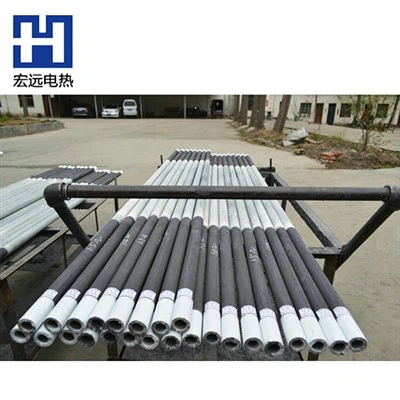

Hey there! As a supplier of silicon molybdenum rods, I often get asked about the lattice structure of these nifty little heating elements. So, let's dive right in and explore what makes the lattice structure of a silicon molybdenum rod so special.


What's a Lattice Structure Anyway?
Before we get into the specifics of silicon molybdenum rods, let's quickly go over what a lattice structure is. In simple terms, a lattice structure is a regular, repeating arrangement of atoms or molecules in a solid material. It's like a 3D puzzle where each piece (atom or molecule) fits neatly into place, creating a stable and organized structure.
The Lattice Structure of Silicon Molybdenum Rods
Silicon molybdenum rods are made primarily of molybdenum disilicide (MoSi₂). This compound has a unique lattice structure that gives it some pretty amazing properties. The lattice structure of MoSi₂ is a hexagonal close-packed (HCP) structure. In an HCP structure, the atoms are arranged in layers, with each layer consisting of a hexagonal pattern of atoms. The layers are then stacked on top of each other in a specific way to form the 3D lattice.
One of the key features of the HCP lattice structure is its high packing density. This means that the atoms are packed closely together, which gives the material high strength and stability. It also helps to explain why silicon molybdenum rods are so resistant to high temperatures. The close packing of the atoms makes it difficult for them to move around, even at very high temperatures.
Another important aspect of the lattice structure of MoSi₂ is its electrical conductivity. The arrangement of the atoms in the lattice allows for the easy flow of electrons, which makes silicon molybdenum rods excellent conductors of electricity. This is why they are commonly used as heating elements in high-temperature furnaces and other industrial applications.
Why Does the Lattice Structure Matter?
The lattice structure of a silicon molybdenum rod plays a crucial role in determining its properties and performance. Here are a few reasons why the lattice structure matters:
- High Temperature Resistance: As mentioned earlier, the close packing of the atoms in the HCP lattice structure makes silicon molybdenum rods highly resistant to high temperatures. They can withstand temperatures of up to 1800°C (3272°F) without melting or deforming, making them ideal for use in high-temperature applications.
- Electrical Conductivity: The lattice structure of MoSi₂ allows for the easy flow of electrons, which gives silicon molybdenum rods excellent electrical conductivity. This means that they can efficiently convert electrical energy into heat, making them an efficient and cost-effective heating solution.
- Chemical Stability: The HCP lattice structure also gives silicon molybdenum rods good chemical stability. They are resistant to oxidation and corrosion, even at high temperatures, which makes them suitable for use in harsh environments.
Other Related Products
In addition to silicon molybdenum rods, we also offer a range of other high-quality products for industrial applications. Check out our Silicon Carbide Rollers, Threaded Silicon Carbide Rod, and Molybdenum Disilicide Heating Element. These products are designed to meet the specific needs of our customers and are known for their high performance and reliability.
Conclusion
So, there you have it! The lattice structure of a silicon molybdenum rod is a fascinating topic that plays a crucial role in determining its properties and performance. Whether you're looking for a high-temperature heating solution or need a reliable material for your industrial application, silicon molybdenum rods are a great choice.
If you're interested in learning more about our silicon molybdenum rods or any of our other products, please don't hesitate to contact us. We'd be happy to discuss your specific needs and help you find the right solution for your application.
References
- "Molybdenum Disilicide (MoSi₂) - Properties, Applications, and Manufacturing", Journal of Materials Science and Technology
- "High-Temperature Materials and Their Applications", CRC Press